
Presented by Billington CyberSecurity & Carahsoft
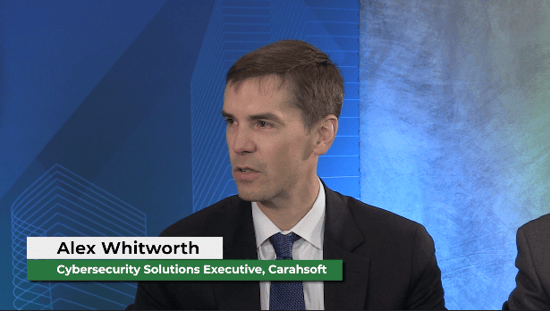
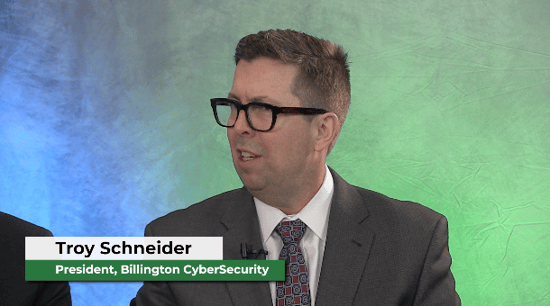
Artificial intelligence is rapidly reshaping the cybersecurity landscape, introducing both new opportunities and new challenges for state and local governments. Alex Whitworth, Cybersecurity Solutions Executive at Carahsoft, and Troy Schneider, President of Billington CyberSecurity, provide insight into how AI is influencing both defensive strategies and emerging threats.
One of the most significant impacts of AI is its ability to enhance threat detection and response. Whitworth explains that many existing cybersecurity platforms are already integrating AI capabilities, allowing organizations to identify anomalies, detect threats more quickly, and respond more effectively. These enhancements are being delivered directly to customers, meaning that many state and local governments are already benefiting from AI without needing to adopt entirely new systems.
 Beyond these incremental improvements, a new generation of AI technologies is emerging. These systems are designed to process large volumes of security data and perform tasks that were traditionally handled by human analysts. In some cases, they can even execute actions autonomously, moving toward the concept of a “self-healing network.”
However, AI is not just a tool for defenders. Adversaries are also leveraging AI to increase the speed and sophistication of their attacks. This creates an ongoing “arms race” between offensive and defensive capabilities, requiring organizations to continuously adapt.
Schneider emphasizes that cybersecurity cannot be addressed in isolation. It is a team effort that requires collaboration across federal, state, and local governments, as well as the private sector. Events like the Billington CyberSecurity Summit provide a forum for sharing information, discussing challenges, and building the relationships needed to respond to evolving threats.
One of the key challenges facing state and local governments is the disparity in resources. Larger states may have more advanced capabilities, while smaller jurisdictions often lack the expertise and funding needed to manage cybersecurity effectively. Whitworth and Schneider both highlight the importance of a “whole-of-state” approach, where larger organizations provide support and services to smaller entities.
 For local leaders, the path forward involves leveraging available resources. This includes tapping into state and federal programs, adopting managed services, and exploring technologies that can help them do more with limited resources. AI, in particular, offers the potential to automate routine tasks, allowing human analysts to focus on more complex issues.
At the same time, the adoption of AI introduces new risks. Schneider points to the challenge of managing large volumes of data and ensuring that critical signals are not lost in the noise. AI can help filter and prioritize information, but organizations must still ensure that they are interpreting and acting on that information correctly.
Whitworth adds that governance and transparency are critical. As organizations deploy AI across different functions, they must understand where it is being used, how it is being managed, and what controls are in place. This includes ensuring data integrity, implementing access controls, and securing the infrastructure that supports AI systems.
Trust is a central issue. For AI to be effective, organizations must have confidence in its outputs. This requires a deliberate approach to implementation, with careful attention to security and oversight. Over time, as trust builds, AI can take on more responsibility, helping organizations address increasingly complex challenges.
The conversation makes it clear that AI is not a silver bullet. It is a powerful tool, but one that must be used thoughtfully and strategically. By combining AI capabilities with strong collaboration, effective governance, and a clear understanding of risk, state and local governments can strengthen their cybersecurity posture and better protect the communities they serve.