Presented by Snowflake & Carahsoft
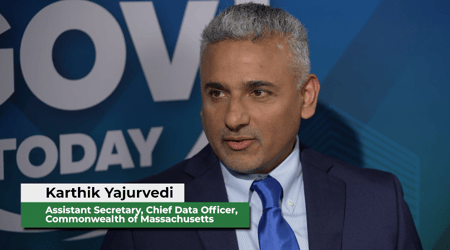
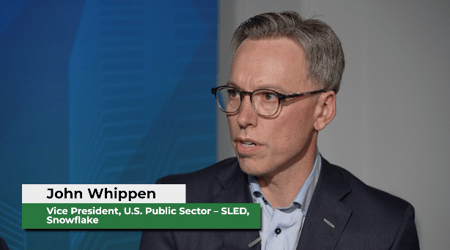
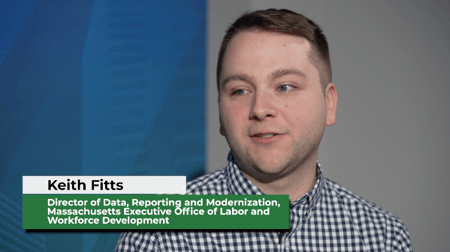
Massachusetts is building a modern data ecosystem designed to improve how government agencies collaborate, make decisions, and deliver services to citizens. In this episode of State Gov Today, host George Jackson explored how the Commonwealth is transforming data from a siloed operational byproduct into a governed, reusable strategic asset. Through conversations with Karthik Yajurvedi, Assistant Secretary and Chief Data Officer for the Commonwealth of Massachusetts, John Whippen, Vice President of U.S. Public Sector SLED at Snowflake, and Keith Fitts, Director of Data, Reporting and Modernization for the Massachusetts Executive Office of Labor and Workforce Development, the discussion highlighted how Massachusetts is combining governance, technology modernization, and cultural change to support cross-agency collaboration and future-ready AI initiatives.
Data as a Product: Inside Massachusetts’ Enterprise Strategy for Cross-Agency Data Sharing
Karthik Yajurvedi explained that Massachusetts’ enterprise data strategy grew out of real operational challenges tied to early childhood services and workforce equity initiatives. State leaders quickly discovered that no single agency possessed all the information needed to fully understand constituent needs. Instead, agencies each maintained pieces of valuable data that, when connected responsibly, could dramatically improve service delivery and policy outcomes.
 That realization pushed the Commonwealth toward a federated data model that balances centralized governance with agency-level ownership. Rather than forcing agencies to relinquish control of their data, Massachusetts established standards around governance, privacy, ethics, and security while allowing agencies to continue managing the information closest to their missions.
A major theme throughout the conversation was the idea of “data as a product.” Yajurvedi stressed that agencies must stop viewing data as simply the output of transactions and instead recognize it as a reusable, governed asset with long-term value. That means assigning ownership, establishing lifecycle management, documenting datasets, and creating access controls that ensure information can be trusted and securely shared.
John Whippen emphasized that successful modernization efforts require a delicate balance between enterprise governance and decentralized innovation. Agencies closest to operational problems often have the clearest understanding of how data can improve outcomes, but enterprise IT organizations must still provide the standards and infrastructure necessary to support interoperability and reduce risk across government.
Trust also emerged as a critical factor in Massachusetts’ success. Yajurvedi described the Commonwealth’s Data User Licensing Agreement framework, which helps agencies align around common processes for securely sharing information. Combined with modern cloud-based data sharing capabilities, Massachusetts has dramatically reduced the friction associated with cross-agency collaboration.
 One of the most impactful examples discussed was the Commonwealth’s Childhood Nutrition Project. By combining datasets from multiple agencies into a unified data product, state leaders discovered that many nutrition assistance programs were underutilized simply because families and organizations were unaware those services existed. The project provided administrators with insights that improved outreach efforts and increased awareness of available resources.
Artificial intelligence was another major topic. Yajurvedi noted that “data readiness is AI readiness,” emphasizing that responsible AI adoption depends entirely on trusted, governed, high-quality data. Massachusetts is already leveraging AI-powered tools to improve data preparation, metadata management, and enterprise cataloging while exploring how AI can support future decision-making capabilities across government.
SGT Keys
- Massachusetts uses a federated data model that balances agency ownership with centralized governance.
- Treating data as a product requires both technological and cultural transformation.
- Trust, partnerships, and standardized agreements are essential for successful data sharing.
- Modern cloud platforms reduce friction and accelerate secure cross-agency collaboration.
- Strong governance and trusted data are foundational for responsible AI adoption.
Modernizing Workforce Data: How Massachusetts is Building Faster, Smarter Citizen Services
Keith Fitts discussed how the Massachusetts Executive Office of Labor and Workforce Development is modernizing workforce and unemployment systems through a centralized Enterprise Data Management platform built on Snowflake. The initiative began by cataloging more than 60 datasets across the executive office and prioritizing them for modernization and integration.
 By bringing workforce, unemployment insurance, and labor market information together into a unified environment, the agency is gaining a more holistic understanding of constituent journeys, particularly transitions from unemployment to re-employment. Fitts explained that modernization has significantly accelerated data access and eliminated many of the delays that previously slowed collaboration between departments.
Security remains central to the strategy. Fitts highlighted the use of granular access controls, dynamic data masking, and zero-trust principles to ensure sensitive workforce information remains protected while still enabling innovation and broader data accessibility.
The modernization effort is already delivering tangible benefits for Massachusetts residents. Enhanced unemployment call center analytics are helping leaders better forecast staffing needs and improve constituent experiences, while upgrades to the state’s JobQuest platform are delivering more reliable employment services and job feeds to residents seeking work.
Looking ahead, Fitts sees artificial intelligence helping agencies transition from descriptive analytics toward predictive analytics that can better anticipate workforce disruptions and improve support for citizens before challenges emerge.
SGT Keys
- Unified workforce data enables faster and more informed decision making.
- Modern governance frameworks dramatically accelerate trusted data access.
- Improved analytics and modernization efforts are already enhancing citizen services.